Would Landing on Europa Make Us Europeans?

As I commented in a previous blog post, one of the most fascinating questions that a person studying the solar system can ask is whether life exists outside of our Earthly home. Within this question lay an abundance of philosophical arguments, all counteracting one another and seeking to define the ‘correct’ answer to this question. Are we self-centered enough to believe that we are the only unique life-carrying planet in the universe? Is that not what makes us special and defines our existence These questions, along with a host of other, could all be answered through the possibility of future exploration of Europa, one of Jupiter’s moons.
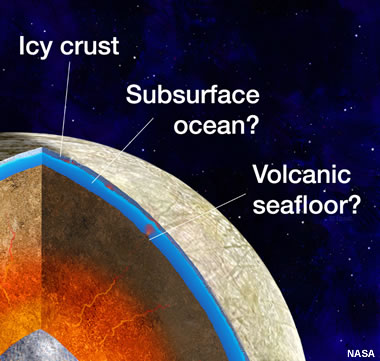
Europa’s composition offers the compelling possibility of life / the development of life

Europa offers a compelling case study to scientists of all sorts – biologists, astronomers, etc.—due to its composition and location. Europa is thought to have more liquid water than that in all of Earth’s oceans trapped beneath a thick and icy crust. Under this crust and in these oceans, some scientists have hypothesized that life could develop in a manner similar to that of Earth. While it would require a space probe landing on the surface of Europa and then undertaking a drilling project to even “scratch the surface” of these hypotheses, this project could quite literally change our understanding of the entire universe. However, as a result of not only the ice but Europa’s location around Jupiter renders photosynthesis (one of the key ingredients — nay the key ingredient — to life on Earth) nearly impossible. This point begs the question: are there other forms through which life can be created by a volcanic seafloor’s heat like on Europa or is photosynthesis and the Earth’s marvelous story of life the end all be all? Stay tuned!
What Else is Out There?

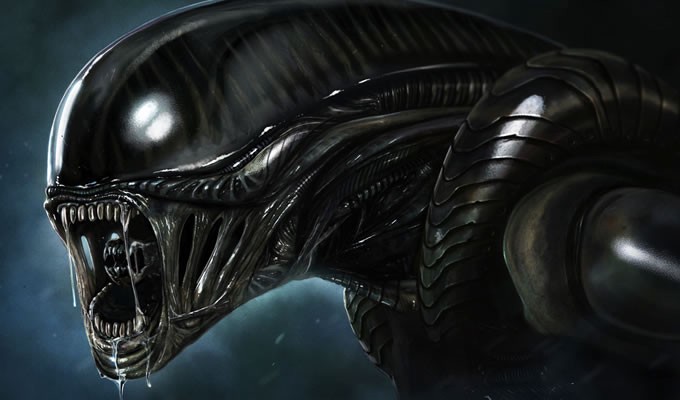
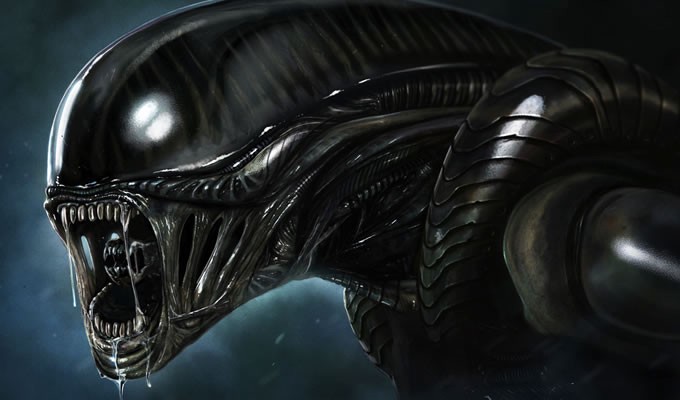
Ever since I was a child, I have enjoyed science-fiction movies and literature. As a subset of this genre, I truly enjoy when these movies incorporate aliens into the equation. The idea that there may be life outside of our own solar system is simultaneously fascinating and terrifying. The discovery of aliens would be the most monumental and world-changing event our planet had ever experienced. No, not the type of alien from Alien or Alien vs. Predator (cause they’d kill us all), but another sentient being capable of finding us or being found and communicating with us.

Not the type of Alien that I hope we would find

The discovery of aliens would change the entire way that we as humans view the world. Many humans hold the belief that we are a unique species and the only beings capable of true thought and maximizing sentient life. What questions would arise from the discovery of another species? Would we discover the aliens or would they discover us? Are they watching us as I type this post? Would they be peaceful and chill or would they harvest our planet and eat us all? As I stated, the discovery of aliens would lead us down a rabbit hole of questions and a potentially scary or amazing situation.

It Does Matter If Your Grandchildren Can See Polar Bears

One of the – quite literally – hottest topics in the world right now (at least prior to the outbreak of the Coronavirus) is the threat of climate change to our world. Climate change is undeniable as scientists have proven over and over that the composition of Earth’s atmosphere is changing (primarily due to pollution produced by humans) and that these changes are leading to higher temperatures around the world. Nonetheless, the primary discussion around climate change is not a conversation on whether it is occurring; the worldwide conversation that is being had revolves around whether or not we as humans should care and take action to stop the continued effects of climate change.

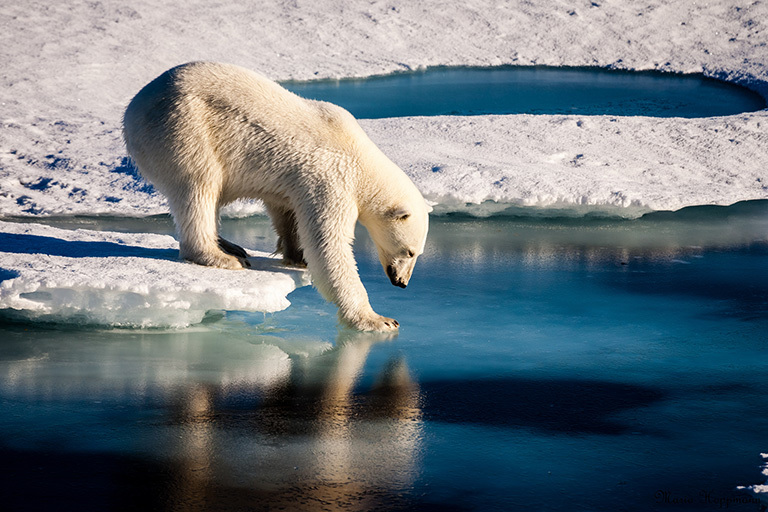
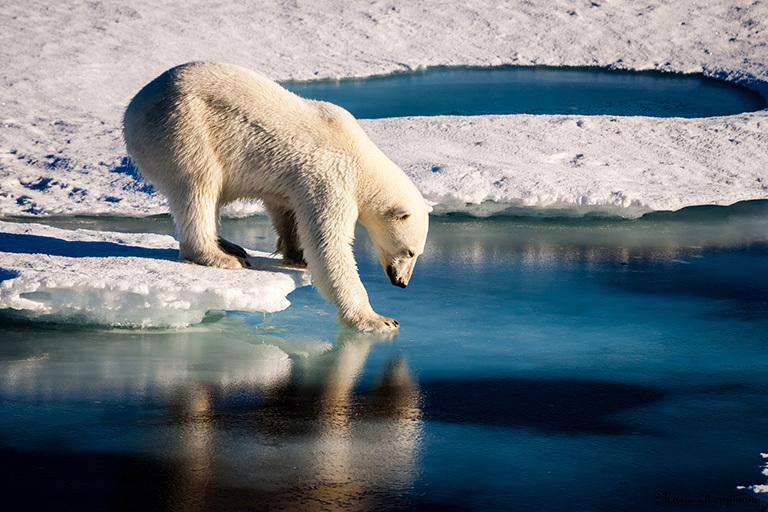
Polar bears are facing extinction as a result of global warming

When discussing climate change with a person who falls on the side of this argument that believes climate change is inevitable and irrelevant to the daily lives of those alive on planet Earth now, this person may say: “I honestly don’t care if my grandkids ever see a polar bear.” This exact quote has been said many times and echoed by the vocal percentage of people who do not empathize with those calling for action to fight climate change. The problem with this quote is that it does matter if your grandchildren can see polar bears in the wild — for if this species goes extinct (in the wild), it will be an indicator that climate change has effectively gone past the “point of no return” from which human action to reverse it will be rendered irrelevant.

Climate change is a reality — per the Environmental Defense Fund, the Earth’s temperature has risen by 1.8 degrees Fahrenheit since the beginning of the 19th century and this number is on pace to grow to 2.7 degrees Fahrenheit by 2030. This rise in the Earth’s temperature has caused an increase in extreme weather events, higher sea levels and extended wildfire seasons — amongst a host of other issues. The time to act on climate change was yesterday and we, as humans, must take better care of the Earth. So the answer is yes, I hope your grandchildren do see polar bears in the wild.

The Historical Advancement of Astronomy

What if there was no apple tree for Newton?

After completing the homework assignment on historical astronomers, I found myself diving into the internet to find out more on the astronomers we researched. This trip down the wormhole of the internet led me to an article about Isaac Newton, titled: “What if there was no Apple tree?” This article ponders what would have happened if Isaac Newton had not observed the apples falling from his tree and asking the question: what force causes this downward motion? As the picture above shows, Newton would have never generated some of the founding principles of physics and astronomy if his face had been locked in on an iPhone rather than looking up and pondering the great questions of life.

These thoughts beg the question: have we as a society lost out on possibly world-altering discoveries due to the loss of some of our greatest minds to technology? Newton’s discoveries and laws advanced science in a way unmatched by most in the history of our civilization. By how many years did Newton’s discoveries advance scientific knowledge? By how many years have we fallen behind as our family, friends, classmates and people around dive further into their phones and further from true thought encouraging the advancement of knowledge?

These questions must be asked as we truly are losing out on advancement. There are many great minds throughout the world making unbelievable advancements, but how much further could we as a collective society go if we spent less time looking at our iPhones and more time watching the apples fall?

Observing the Sky at Night

One of my favorite pastimes is observing the sky at night and seeing which constellations I can point out. While I am no expert by any stretch of the imagination, I like to think that I have a basic knowledge of several “main” constellations — Orion’s Belt, the North Star, the Big / Little Dipper, etc. Knowing these constellations makes me feel connected to the universe in a very real way, as if those stars are not so distant after all.

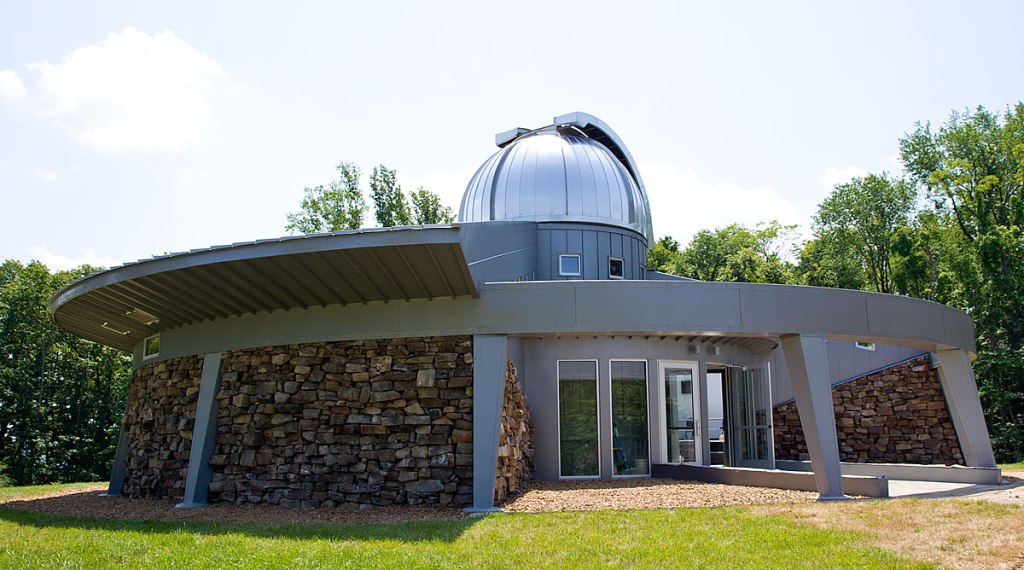
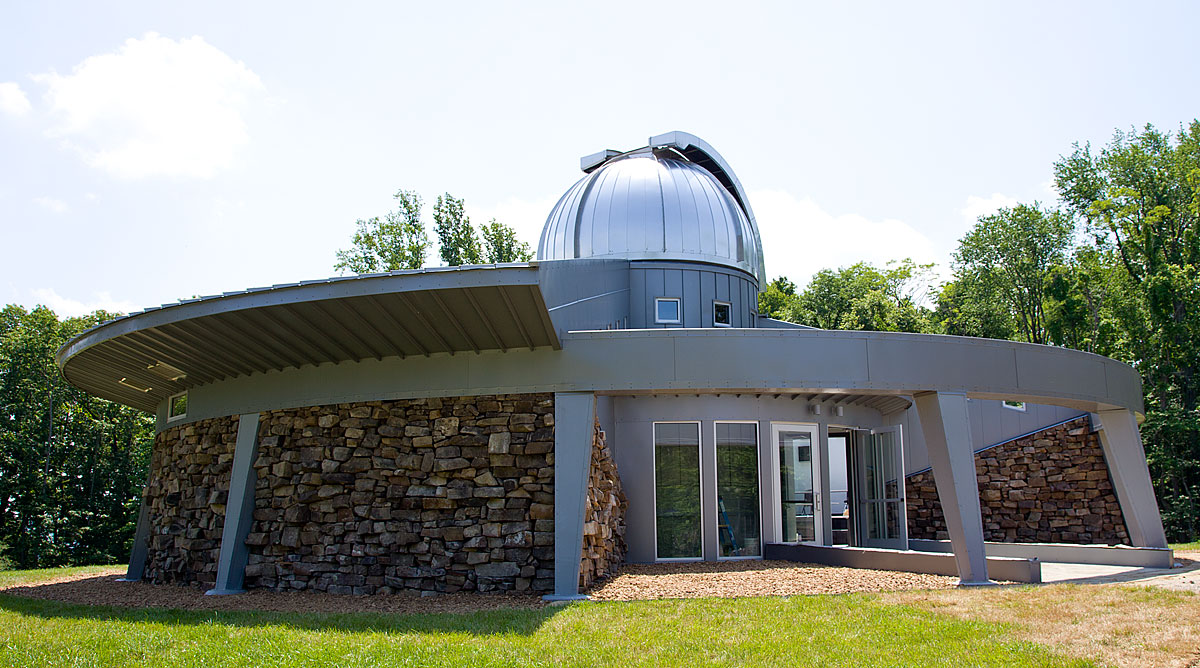
Montgomery Bell Academy’s Long Mountain Observatory

My knowledge of the stars and passion for learning new constellations began during my time in high school at Montgomery Bell Academy, located here in Nashville. One of the excellent opportunities that my high school afforded me was the opportunity to travel to the school’s observatory on Long Mountain in Tennessee. This location has one of the lowest amounts of ambient light in the South, making it a perfect location for stargazing. I have many fond memories of trips to Long Mountain to look at the sky, gathered around a campfire with friends and marveling at the vastness of our universe. Nonetheless, the knowledge that we can gain from learning about the universe — in my experience — connects us with it, making the universe seem just a little smaller and closer to home.

An Introduction

This post is intended to introduce readers to the blog and its author, Jesse Turner.

My name is Jesse Turner and I am a senior at Vanderbilt University. I am originally from Nashville, TN, and my hometown links directly to my choice of image below.

As a native Tennessean, my favorite football team is the Tennessee Titans. My fandom has been the source of many highs (zeniths, if you will) and lows during the course of my life. This team, along with the city of Nashville (both showcased perfectly in this image), have been two of the center-points around which my life has revolved.

Nonetheless, you may be asking yourself: “What do the Tennessee Titans have to do with a blog on the solar system?” Well, in all honesty, very little. But as I wrote this blog, I simply reflected on the size of the universe — explored perfectly in this post from Space.com.

We are but a blip in the universe — a microscopic fragment floating on a rock hurling through an expanding universe at unimaginable speeds. So while the noise of a Titans game my burst one’s eardrums, the size of the universe and our relative scale within it can blow one’s mind.

Design a site like this with WordPress.com
Get started